
Understanding Vendor Management Platforms
Businesses today manage dozens, hundreds, and sometimes thousands of vendors. A company may rely on software providers, logistics partners, recruitment agencies, legal teams, hardware suppliers, and external consultants at the same time. Trying to track all of these relationships through spreadsheets quickly becomes chaotic. That is where a Vendor Management Platform (VMP) enters the picture. Platforms like Gatekeeper organize vendor relationships through a centralized system where contracts, performance data, risk metrics, approvals, and compliance activities live together.
Think of a vendor management system as an airport control tower. Planes continue moving independently, but a central system tracks everything, prevents collisions, and ensures operations run smoothly. Organizations increasingly want platforms that reduce manual work and create visibility. Procurement leaders are under pressure to lower risk and improve operational efficiency. A vendor platform becomes less of a luxury and more of a strategic business tool.
Digital transformation is also changing expectations. Companies now expect self-service dashboards, workflow automation, electronic signatures, AI-powered search, and real-time reporting. Modern procurement teams want platforms that feel as smooth as consumer applications. Building a solution like Gatekeeper means creating software that balances usability with enterprise-level complexity.
Why Businesses Want Platforms Like Gatekeeper
Organizations are moving away from disconnected tools because fragmented information creates expensive blind spots. Imagine a company forgetting that a contract renews automatically next month. That oversight could trigger unnecessary spending or legal complications. Vendor management systems help prevent those issues by tracking critical dates and responsibilities.
Many enterprises also face growing regulatory pressure. Data privacy laws, cybersecurity requirements, supplier audits, and sustainability reporting are becoming standard expectations. Businesses increasingly need visibility into vendor risks and obligations. A platform can automate reminders, trigger approval workflows, and store compliance documents in one searchable environment.
There is another important factor: speed. Procurement teams no longer want long email chains just to approve a supplier. They want workflows that automatically move requests from one stakeholder to another. This shift means software builders must focus not only on functionality but also on reducing friction.
The best platforms do not simply store information. They transform disconnected vendor activities into a living ecosystem where users can monitor relationships, predict risks, and act quickly.
Essential Features for a Vendor Management Platform
Building a vendor platform without prioritizing features is like constructing a house without a blueprint. You may eventually create something useful, but the process becomes messy and expensive. The smartest approach begins with identifying core modules.
Vendor onboarding should sit near the top of the priority list. Businesses need the ability to invite suppliers, collect business details, gather certifications, and verify legal information. This process becomes much smoother when automated forms and guided workflows are included.
Contract lifecycle management also plays a major role. Users need a central location where contracts can be uploaded, categorized, approved, and monitored. Automatic reminders for renewals and expiration dates save teams from expensive oversights.
Performance tracking matters as well. Organizations want dashboards showing vendor scores, project delivery timelines, responsiveness, spending trends, and risk indicators. Data visualization tools convert raw numbers into practical decisions.
A strong feature foundation often includes:
FeatureBusiness ValueVendor onboardingFaster supplier setupContract managementCentralized visibilityWorkflow automationReduced manual workRisk trackingLower compliance exposureReporting dashboardsBetter decision-makingUser permissionsSecurity and control
These modules create the backbone of a modern VMP.
Vendor Onboarding and Workflow Automation
The onboarding experience can determine whether users enjoy or abandon your platform. If the process feels confusing, suppliers become frustrated before they even enter the ecosystem. A clean onboarding workflow should reduce effort while gathering meaningful data.
Start by creating customizable forms. Different industries collect different information. Healthcare companies might require regulatory certifications, while technology companies may prioritize cybersecurity assessments. Your platform should support dynamic fields rather than rigid templates.
Document collection deserves special attention. Businesses regularly request tax forms, insurance certificates, financial records, and agreements. Rather than requiring email attachments, users should upload files directly into the platform. Automated validation can improve accuracy.
Workflow automation transforms the experience further. Instead of manually forwarding approvals, the system can route requests based on rules. If a contract value exceeds a specific amount, the workflow might notify legal teams or executive stakeholders automatically.
This process creates a chain reaction of efficiency. Teams spend less time pushing paperwork and more time making strategic decisions.
Contract Lifecycle Management Capabilities
Contracts are the heartbeat of vendor relationships. Every expectation, obligation, payment structure, and legal requirement eventually lives inside a contract. A platform similar to Gatekeeper needs robust Contract Lifecycle Management (CLM) functionality.
Users should be able to upload existing contracts or create new agreements through templates. Metadata tagging becomes essential because organizations need fast search capabilities. Teams should locate contracts based on vendor name, department, contract value, expiration date, or risk level.
Version control is equally important. Imagine several departments editing agreements simultaneously. Without proper tracking, confusion grows rapidly. Version histories ensure transparency and accountability.
Electronic signatures have also become expected functionality. Integration with services such as DocuSign or Adobe Sign creates smoother approval experiences.
Strong contract systems transform static documents into interactive business assets. Instead of becoming forgotten files inside digital folders, agreements actively generate reminders, insights, and actions.
Risk and Compliance Management Features
Vendor risk management has become one of the most valuable components of procurement technology. Businesses increasingly understand that external suppliers can create cybersecurity vulnerabilities, legal exposure, and operational disruptions.
Picture a chain with hundreds of links. A single weak link can create serious consequences across the entire structure. Vendors operate similarly. If one supplier experiences data breaches or regulatory failures, downstream organizations may also suffer.
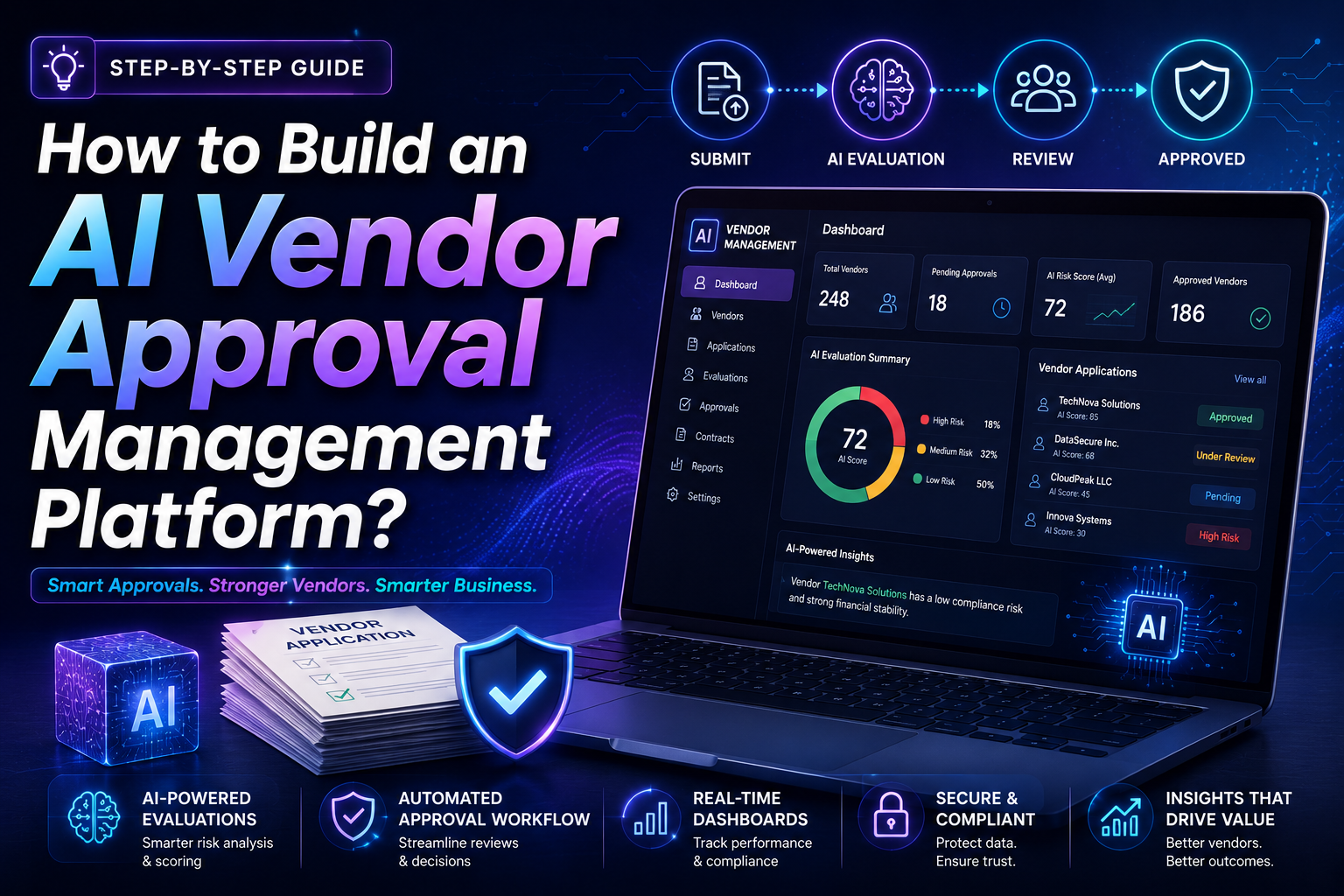
Your platform should include risk scoring systems that analyze factors such as financial stability, compliance certifications, data security standards, and historical performance. Users should visualize risk levels through dashboards and alerts.
Compliance tracking should support document expiration notifications. If insurance certificates expire or required certifications disappear, the system should generate alerts automatically.
Risk modules also benefit from questionnaires and assessments. Organizations often require vendors to complete security surveys and operational reviews. Automating these processes dramatically reduces administrative effort.
Choosing the Right Frontend Technology
The frontend acts as the face of your platform. Users interact with dashboards, forms, reports, and workflows through this layer. Even powerful backend architecture can fail if the interface feels slow or confusing.
React remains one of the most common choices for enterprise platforms because it supports reusable components and scalable interfaces. Angular also performs well for large systems that require structured development practices.
Design matters as much as technology selection. Users expect responsive layouts that work across desktop and mobile devices. Procurement managers may review approvals during meetings or while traveling.
A clean dashboard often includes charts, activity feeds, notifications, search functionality, and quick actions. Instead of overwhelming users with information, prioritize visual hierarchy.
The goal is simple: create an experience where users instinctively know what to do next.
Building a Scalable Backend Architecture
The backend serves as the engine underneath the platform. Every notification, workflow trigger, authentication request, and database interaction depends on backend systems.
Developers frequently choose Node.js, Python, Java, or .NET environments depending on project requirements and internal expertise. Microservice architecture has also become increasingly popular because it separates functions into manageable components.



Write a comment ...