Travel has changed dramatically over the last decade. Gone are the days when people carried folded paper maps, guidebooks, and printed hotel reservations in oversized backpacks. Today, travelers expect everything to live inside a smartphone. From discovering hidden cafés in Prague to planning a multi-city European road trip, users want intelligent travel companions that work instantly and intuitively. That is exactly why map-based travel apps like Sygic Travel, Google Maps, TripIt, and Roadtrippers have exploded in popularity.
The global travel technology market has been growing rapidly, driven by mobile-first users and the increasing demand for personalized travel experiences. According to recent travel-tech industry reports, mobile travel bookings now account for a significant share of online travel transactions worldwide. Travelers are no longer searching only for directions. They want recommendations, offline navigation, itinerary planning, ticket bookings, reviews, and even AI-generated travel suggestions in a single ecosystem.
Map-based travel apps sit at the center of this digital transformation. They combine geolocation, data visualization, travel planning, and personalized recommendations into one seamless experience. Think of these apps like a digital tour guide mixed with a smart assistant. Instead of simply showing roads, they tell stories, predict user preferences, and optimize entire journeys. That combination creates high user engagement and long retention periods, which is gold for app businesses.
For entrepreneurs and startups, building a travel app similar to Sygic Travel presents a massive opportunity. The tourism sector continues to rebound globally, and travelers increasingly rely on mobile apps to reduce stress and save time. If your application can simplify planning while delivering a visually engaging experience, users are far more likely to keep returning.
Why Travelers Prefer Interactive Travel Planning
Modern travelers crave convenience. They want to plan trips quickly without juggling dozens of tabs, websites, and apps. Interactive travel planning solves that problem by creating a centralized environment where users can organize everything visually. Humans naturally process visual information faster than text, which explains why map-driven interfaces feel intuitive and engaging.
Imagine planning a week-long trip to Italy. Instead of manually creating spreadsheets and lists, a user can simply tap locations on a map, generate routes automatically, estimate travel times, and receive attraction recommendations nearby. It feels less like work and more like building a personalized adventure. That emotional connection matters because travel planning often begins with excitement and curiosity.
Interactive maps also improve decision-making. When travelers see attractions geographically, they can optimize routes and avoid wasting time. Features such as drag-and-drop itinerary builders, weather overlays, and crowd indicators create practical value that users appreciate immediately. This reduces planning fatigue and increases trust in the application.
Another reason these apps succeed is personalization. AI and behavioral analytics now allow travel apps to learn user preferences over time. If someone consistently searches for museums, hiking trails, or luxury restaurants, the app can tailor recommendations automatically. That transforms the platform from a static utility into a personalized travel companion.
The Market Growth of Travel Technology
The travel technology industry has become one of the fastest-evolving digital sectors. Companies are investing heavily in AI-driven recommendations, location intelligence, augmented reality, and smart booking systems. As smartphones become more powerful, travel applications are evolving into complete ecosystems rather than standalone tools.
Several market research firms estimate the global travel app market will continue growing steadily through 2030. One major driver is the rise of independent travelers who prefer planning trips themselves instead of relying on traditional travel agencies. Digital nomads, solo travelers, and Gen Z tourists especially favor mobile-first planning tools.
Another contributing factor is offline functionality. Travelers frequently lose internet access while abroad, making offline maps and downloaded itineraries essential features. Sygic Travel became popular partly because it addressed this pain point effectively. By allowing users to navigate without constant connectivity, the app improved reliability and user satisfaction.
Investment in location-based services has also accelerated. Businesses now understand the value of geospatial data. Hotels, restaurants, tour operators, and tourism boards increasingly collaborate with map-based platforms to improve visibility. This creates monetization opportunities for app owners through partnerships, advertising, and premium subscriptions.
What Makes Sygic Travel Popular
Sygic Travel earned recognition because it combined multiple travel functions into a visually appealing and practical platform. Instead of focusing solely on navigation, the app created a complete travel-planning experience. Users could discover attractions, organize itineraries, calculate routes, and navigate offline within one interface.
One of its biggest strengths is simplicity. The interface feels clean and easy to understand, even for first-time users. Travelers can quickly add destinations, rearrange plans, and estimate travel durations without technical complexity. That user-friendly design lowers friction and encourages continued engagement.
Another major factor is content quality. Sygic Travel integrates detailed travel information, attraction descriptions, photos, and user-generated insights. This transforms the app into both a planning tool and an educational guide. People enjoy browsing destinations before traveling because the experience feels immersive and inspiring.
Offline functionality also contributes heavily to its success. Travelers often struggle with roaming charges and unstable internet connections. By enabling offline maps and saved itineraries, the app becomes dependable regardless of location. Reliability builds trust, and trust drives retention.
Key Features That Attract Users
The most successful map-based travel apps share several common features. These features are not just “nice additions.” They directly influence engagement, usability, and monetization potential.
FeaturePurposeUser BenefitInteractive MapsVisual navigation and discoveryEasier trip planningOffline AccessNavigation without internetReduced roaming costsItinerary BuilderOrganizes travel schedulesSaves timeAI RecommendationsPersonalized suggestionsBetter experiencesBooking IntegrationsHotels, flights, ticketsConvenienceRoute OptimizationEfficient travel pathsLess travel stress
Users love applications that reduce complexity. Every feature should eliminate friction rather than create additional steps. A great travel app behaves like a calm, organized travel companion rather than a cluttered dashboard.
Business Model Behind the Platform
Travel apps like Sygic Travel generate revenue through multiple channels. Subscription models are particularly effective because travelers value premium tools such as offline maps, advanced planning features, and ad-free experiences. Freemium structures often work best because they attract large audiences while encouraging upgrades later.
Affiliate marketing also plays a major role. Hotels, airlines, car rental agencies, and activity providers frequently pay commissions for bookings generated through the platform. Even a small commission per transaction can become highly profitable at scale.
Advertising partnerships provide another monetization route. Tourism boards and local businesses often pay for promoted listings or featured placements. Since map-based apps capture users with high purchase intent, advertisers view them as valuable marketing channels.
Data insights can also create revenue opportunities. Anonymous travel behavior analytics help tourism companies understand visitor patterns and optimize marketing campaigns. Of course, privacy compliance and transparent user consent are critical here.
Essential Features for a Travel App
Developing a successful travel app requires careful feature prioritization. Many startups fail because they attempt to build everything at once. Instead, focus first on core features that solve the biggest user problems.
Interactive Maps and GPS Navigation
Interactive maps form the backbone of any travel application. Without reliable mapping, the app loses its central value proposition. Most developers use APIs like Google Maps, Mapbox, or OpenStreetMap to power navigation and geolocation services.
The interface should feel fluid and responsive. Users need smooth zooming, accurate location tracking, and fast route calculations. Real-time traffic data, walking directions, cycling routes, and public transportation support can significantly improve usability.
Layered map experiences are also becoming increasingly popular. Travelers appreciate overlays such as weather conditions, tourist hotspots, safety alerts, and crowd density indicators. These layers transform ordinary maps into intelligent travel companions.
Offline maps are equally essential. Travelers cannot depend entirely on internet connectivity, especially abroad. Downloadable maps and cached data ensure uninterrupted usability. Think of offline support as the emergency flashlight of your app — users may not always need it, but they absolutely value having it.
AI-Powered Itinerary Planning
Artificial intelligence is rapidly reshaping travel planning. AI-powered itinerary systems can analyze user preferences, trip duration, budget, and interests to generate personalized schedules automatically.
Instead of manually organizing dozens of attractions, users can receive optimized recommendations instantly. For example, the app could suggest visiting nearby landmarks based on operating hours and travel distance. This creates efficient travel routes while minimizing decision fatigue.
Machine learning also improves recommendations over time. The more users interact with the platform, the more accurately the system understands their preferences. This personalization increases engagement and encourages repeat usage.
Chatbot integration adds another layer of convenience. AI assistants can answer travel questions, suggest nearby attractions, or help users rebook reservations during disruptions. In many ways, AI acts like a digital concierge available 24/7.
Offline Accessibility
Offline functionality remains one of the most important competitive advantages for travel apps. Travelers often encounter unreliable networks, expensive roaming charges, or remote destinations with weak connectivity.
Offline access should include maps, saved itineraries, hotel confirmations, and emergency information. Some advanced applications even allow translation tools and currency converters to work offline.
Implementing offline functionality requires careful data synchronization. Developers need smart caching mechanisms that store relevant content locally while updating seamlessly when connectivity returns. This balance between performance and storage efficiency is crucial.
Users perceive offline capabilities as reliability insurance. It creates confidence during travel, especially in unfamiliar environments. That emotional reassurance can strongly influence app ratings and reviews.
Booking and Reservation Integrations
Travelers prefer convenience above almost everything else. Integrating bookings directly into the app removes friction and keeps users within your ecosystem.
Popular integrations include:
Hotel booking systems
Flight APIs
Car rental services
Event ticketing
Restaurant reservations
These integrations create a one-stop travel hub. Instead of switching between multiple apps, users can manage entire journeys from a single platform. This improves retention while increasing monetization opportunities through affiliate commissions.
Security becomes especially important here. Payment systems must comply with regulations such as PCI DSS standards. Encryption, secure authentication, and transparent privacy policies are essential for user trust.
Choosing the Right Technology Stack
Selecting the right technology stack determines your app’s scalability, speed, and long-term maintainability. A poor technical foundation can become painfully expensive later.
Frontend Technologies
For cross-platform mobile development, frameworks like Flutter and React Native are extremely popular. They reduce development time by enabling a shared codebase across iOS and Android platforms.
Flutter offers excellent UI flexibility and smooth animations, making it ideal for visually rich travel applications. React Native, backed by Meta, provides strong community support and extensive plugin availability.
Native development still has advantages for highly performance-intensive applications. Swift for iOS and Kotlin for Android offer deeper hardware optimization and superior responsiveness. If your app relies heavily on AR navigation or advanced geospatial rendering, native approaches may be preferable.
The frontend should prioritize speed and intuitive interaction. Slow-loading maps or laggy transitions can frustrate users quickly. Travel apps must feel responsive because users often interact with them while moving physically.
Backend Infrastructure
The backend serves as the brain of the application. It manages user data, authentication, recommendations, analytics, and synchronization.
Popular backend technologies include:
ComponentRecommended OptionsServer FrameworkNode.js, Django, LaravelDatabasePostgreSQL, MongoDBCloud HostingAWS, Google Cloud, AzureAuthenticationFirebase Auth, OAuthReal-Time DataWebSockets, Firebase
Scalability matters enormously. Travel apps often experience seasonal traffic spikes during holidays and vacation periods. Cloud-native architecture helps applications scale dynamically under increased demand.
Microservices architecture is also gaining popularity. Instead of building one giant system, developers create smaller independent services for maps, bookings, notifications, and recommendations. This improves flexibility and simplifies updates.
APIs and Third-Party Services
Third-party integrations dramatically accelerate development. Rather than building everything from scratch, developers can leverage existing APIs for mapping, bookings, weather data, and payments.
Popular APIs include:
Google Maps API
Mapbox API
Skyscanner API
OpenWeather API
Stripe Payment Gateway
Choosing APIs carefully is essential because pricing can escalate rapidly as user numbers grow. Developers should estimate long-term operational costs before committing to specific providers.
Reliability also matters. If a third-party service experiences downtime, your app may suffer too. Redundancy strategies and fallback systems help reduce operational risks.
UI and UX Design Principles
Design can make or break a travel application. Even powerful functionality becomes useless if users feel overwhelmed or confused.
Designing for Simplicity and Speed
Travel apps should feel effortless. Travelers already deal with enough stress — delayed flights, language barriers, transportation confusion, and scheduling challenges. Your interface should reduce anxiety rather than amplify it.
Minimalist design works particularly well in travel apps because maps naturally contain large amounts of visual information. Clean layouts, intuitive icons, and straightforward navigation help users focus on planning instead of learning the interface.
Speed is equally important. Research consistently shows that users abandon slow apps quickly. Optimized image loading, lightweight animations, and efficient caching improve responsiveness significantly.
Accessibility should not be ignored either. Color contrast, readable typography, voice navigation, and multilingual support create inclusive experiences for broader audiences.
Personalization and User Retention
Retention separates successful travel apps from forgettable ones. Personalized experiences keep users emotionally invested.
Recommendation engines can suggest destinations based on browsing history, travel style, and seasonal trends. Push notifications can remind users about saved itineraries or nearby attractions during trips.
Gamification also boosts engagement. Features like travel achievements, badges, and trip-sharing create social motivation. Humans naturally enjoy documenting experiences and comparing adventures with friends.
Community-generated content adds authenticity. Reviews, photos, and travel tips from real users increase trust dramatically. People often trust fellow travelers more than corporate marketing copy.
Development Process Step by Step
Building a map-based travel app requires strategic planning. Jumping directly into coding without validation often leads to wasted resources.
Market Research and Competitor Analysis
Every successful app begins with understanding the market deeply. Analyze competitors like Sygic Travel, TripAdvisor, Roadtrippers, and Google Travel carefully.
Study their strengths and weaknesses. Read user reviews to identify recurring complaints and unmet needs. These gaps often reveal opportunities for differentiation.
Audience research is equally important. Backpackers, luxury travelers, digital nomads, and family vacationers all have different expectations. Defining your target audience early shapes product decisions effectively.
Validation interviews can save enormous amounts of money. Speaking directly with travelers reveals frustrations that analytics alone cannot capture.
MVP Development Strategy
An MVP, or Minimum Viable Product, focuses on essential functionality only. This approach reduces risk while enabling faster market testing.
A basic MVP for a travel app might include:
User registration
Interactive maps
Attraction discovery
Simple itinerary planning
Offline map support
Launching early allows startups to gather feedback before investing heavily in advanced features. Think of the MVP like building the skeleton before adding muscles and skin.
Agile development methodologies work especially well for travel apps because they support continuous iteration. Frequent updates based on user behavior improve product-market fit over time.
Testing, Launch, and Scaling
Testing should cover functionality, usability, performance, and security. Travel apps rely heavily on location services, which means GPS accuracy and synchronization must be verified carefully.
Beta testing with real travelers provides valuable insights. Unexpected issues often appear only in real-world conditions such as weak connectivity or international roaming environments.
Marketing strategy matters just as much as development. App Store Optimization (ASO), influencer collaborations, and travel blogging partnerships can accelerate growth significantly.
Once traction increases, scaling infrastructure becomes essential. Performance bottlenecks, server overloads, and API limitations can damage user trust quickly if ignored.
Monetization Strategies for Travel Apps
Monetization should feel natural rather than intrusive. Aggressive advertising can damage user experience rapidly.
Freemium models remain highly effective. Users access basic functionality for free while paying for advanced features like premium maps, AI itineraries, and offline travel guides.
Affiliate partnerships generate recurring revenue through bookings and reservations. Travel is particularly lucrative because transactions often involve high-value purchases such as hotels and flights.
Subscription models provide predictable recurring income. Many travelers willingly pay for convenience, especially frequent travelers who rely heavily on planning tools.
Corporate partnerships also create opportunities. Tourism boards, airlines, and hospitality brands frequently sponsor travel content and promotional campaigns.
Cost to Develop a Map-Based Travel App
The development cost depends on complexity, team structure, and feature scope.
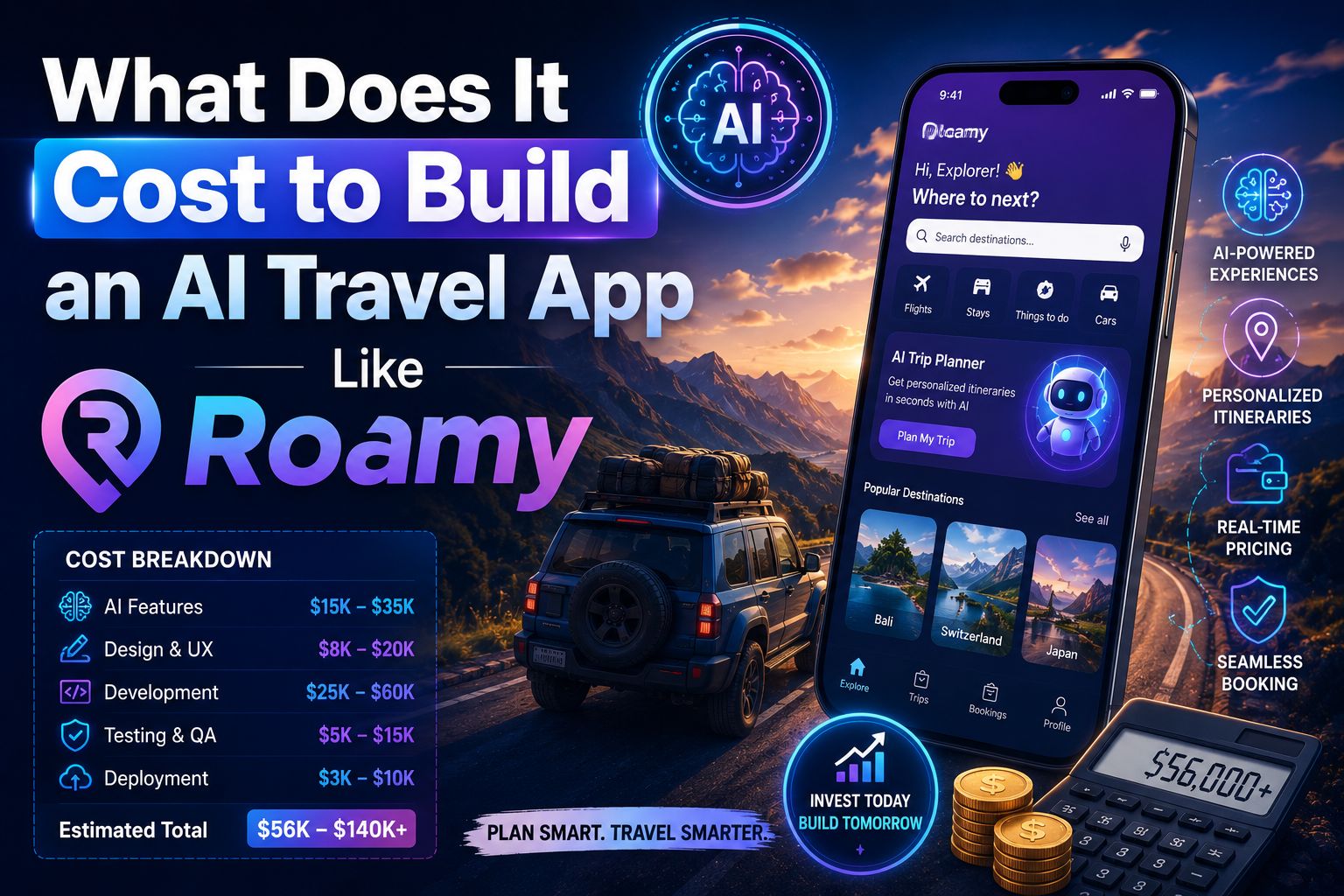
App ComplexityEstimated CostBasic MVP$25,000 – $50,000Mid-Level App$60,000 – $120,000Advanced AI Travel Platform$150,000 – $400,000+
Several factors influence cost:
UI/UX complexity
Offline map support
AI recommendation systems
Real-time synchronization
API usage fees
Security infrastructure
Hiring location also matters significantly. Development teams in North America typically charge more than teams in Eastern Europe or Asia. However, communication quality and expertise should outweigh purely cost-based decisions.
Challenges in Building Travel Applications
Travel apps face unique technical and operational challenges. One major issue is handling real-time data reliably. Flight schedules, traffic conditions, and weather updates change constantly.
Another challenge involves API dependency. Third-party providers can change pricing structures or usage limits unexpectedly. Businesses must prepare contingency plans to avoid service disruption.
Privacy compliance presents another hurdle. Travel apps collect highly sensitive location data, making GDPR and data protection compliance essential.
Competition is also intense. Major players like Google already dominate mapping infrastructure. New startups must differentiate through niche targeting, superior UX, or innovative personalization features.
Future Trends in Travel App Development
The future of travel technology looks incredibly exciting. Artificial intelligence will continue transforming trip planning through predictive recommendations and conversational interfaces.
Augmented reality navigation is gaining momentum as well. Imagine pointing your phone at a street and instantly seeing restaurant ratings, historical information, or directional overlays in real time.
Voice-based travel assistants will also expand rapidly. Travelers increasingly expect hands-free interaction while navigating unfamiliar environments.
Sustainability features are becoming more important too. Eco-conscious travelers want carbon footprint estimates, public transit recommendations, and sustainable accommodation suggestions integrated directly into travel apps.
Blockchain-based identity verification and secure travel records may also reshape digital tourism ecosystems in the coming years.
Conclusion
Developing a map-based travel app like Sygic Travel requires far more than integrating maps and GPS functionality. The most successful platforms combine intuitive design, intelligent recommendations, offline reliability, and seamless booking experiences into one cohesive ecosystem. Travelers today expect convenience, personalization, and speed, which means every feature should simplify the travel journey rather than complicate it.
The travel technology market continues growing rapidly, creating strong opportunities for startups and entrepreneurs willing to innovate. By focusing on user-centric design, scalable architecture, and strategic monetization models, businesses can build highly engaging travel platforms with long-term growth potential.
Success ultimately depends on understanding traveler behavior deeply. The best travel apps do not merely provide directions — they inspire exploration, reduce stress, and transform trip planning into an enjoyable experience. In many ways, a great travel app becomes a trusted companion that users carry everywhere they go.
FAQs
1. How long does it take to develop a travel app like Sygic Travel?
Development time depends on complexity. A basic MVP may take 3 to 6 months, while a feature-rich application with AI and offline support could require 9 to 18 months.
2. Which map API is best for travel app development?
Google Maps and Mapbox are among the most popular options. Google Maps offers excellent global coverage, while Mapbox provides greater customization flexibility.
3. Is offline functionality necessary for travel apps?
Yes. Offline access significantly improves usability for travelers dealing with poor connectivity or expensive roaming charges abroad.
4. What is the best monetization strategy for travel apps?
Freemium subscriptions combined with affiliate booking commissions often create the strongest revenue model for travel applications.
5. Can AI improve travel app engagement?
Absolutely. AI enhances personalization, itinerary generation, recommendation accuracy, and chatbot support, all of which improve user retention.





Write a comment ...